
Understanding Your Tissue Ownership Rights as a Cancer Patient
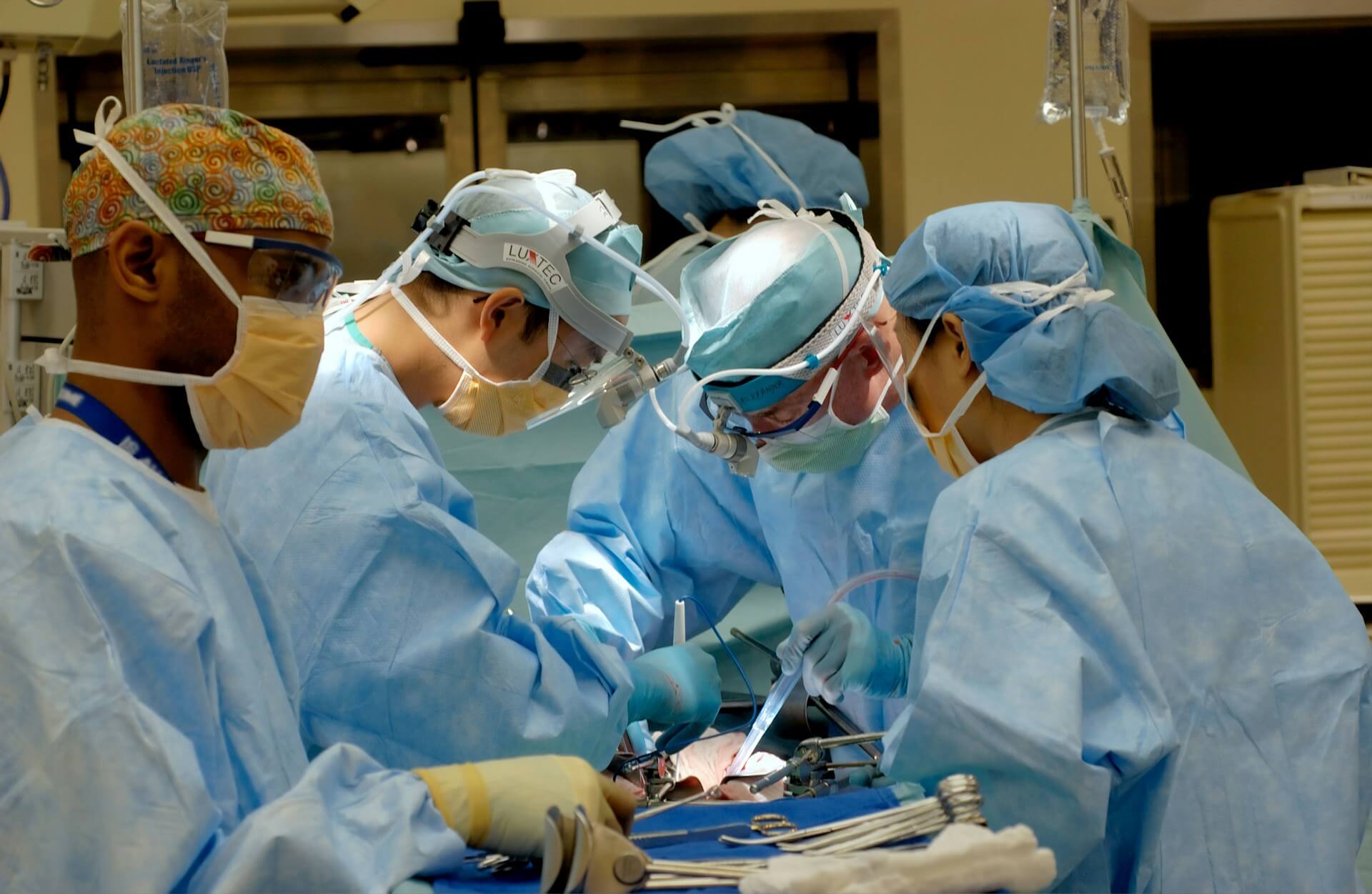
After tumor removal surgery, most patients assume one of two things: either the tissue was theirs to begin with, or it belongs to the hospital. It seems like a question with an obvious answer. In fact, who owns tumor tissue is one of the most misunderstood aspects of cancer care, and the gap between what patients assume and what the law actually says can have real consequences for their future options.
The question is worth asking before your surgery, not after. Here is what you should know.
The default answer under US law
Under current US law, the picture for patients is not straightforward. Courts have historically treated excised tissue (tissue surgically removed from the body) as something closer to abandoned property than personal property. The landmark 1990 case Moore v. Regents of the University of California established that a patient does not retain a property interest in tissue once it has been removed, even if that tissue is later used for commercial research purposes without the patient's knowledge.
That ruling has shaped hospital policy ever since. Once your tumor is removed, your hospital's pathology department takes custody of it for diagnostic purposes. What happens after diagnosis depends almost entirely on the institution's internal retention policy, which varies widely. Some hospitals store FFPE tissue blocks for five to ten years; others hold them indefinitely; others discard residual material after a shorter period.
Patients generally cannot compel a hospital to return tissue, release it to an outside lab, or preserve it indefinitely. The legal framework treats the hospital as the custodian, not the patient.
Important note: This article contains general information about how US law and hospital policy have historically worked. It is not legal advice. Policies and statutes vary significantly by state and by institution. If you have specific legal questions about your tissue rights, consult a qualified attorney.
What this means in practice
For most patients, the legal framework described above never surfaces as a problem, because they never try to access their tissue again. But for patients who want to use their tissue later, the picture changes considerably.
If you want to have your tumor tested at an outside laboratory months or years after surgery, you may find that your hospital has already discarded the material, or that only a small and degraded FFPE block remains. Requesting transfer of that block is possible in some cases, but it is not guaranteed, and the hospital may decline or charge fees for processing.
If you are hoping to qualify for a clinical trial that requires patient-derived living tissue, you will be entirely dependent on whatever the hospital has retained, which is almost always fixed, not live. Many functional testing protocols simply cannot be run on FFPE material.
If you want to use your tumor for organoid modeling or drug sensitivity testing, that window closed at the moment of surgery. Formalin fixation is irreversible. No policy change or legal argument can restore living cells that have already been chemically preserved.
The practical reality is this: once the tissue leaves the operating room, your ability to influence what happens to it drops dramatically. The cancer tissue ownership question has to be answered before that moment.
How custodial biobanking changes this
Custodial biobanking is a service designed specifically to address the gap between what hospitals do by default and what patients may want for the future. A custodial biobanking service arranges, in advance of your surgery, to coordinate with your surgical team and pathology lab to collect a portion of your tumor tissue before it enters standard hospital processing.
The critical difference is legal structure. In a custodial biobanking arrangement, the tissue is collected and preserved on your behalf, with you (the patient) retaining ownership. You decide what testing happens and when. You decide whether your tissue contributes to research, and under what conditions. Nothing happens to your sample without your direction.
This is what "own your biology" means in practice. It is not a metaphor. It is a set of legal and logistical arrangements that have to be established before your surgery, so that when your tumor is removed, there is already a clear chain of custody running back to you.
Your tissue is preserved across multiple formats (typically cryopreserved living cells, flash-frozen samples, and FFPE sections), giving you the broadest range of future options. Whether you want functional drug testing six months from now, tissue for a clinical trial, or simply the peace of mind of knowing your options remain open, custodial biobanking is what makes that possible.
Most hospitals are willing to cooperate with outside custodial services. The logistics require coordination, but the process is established. What it requires from you is acting early enough to put the arrangements in place.
What to ask about before surgery
If you are preparing for tumor removal surgery, these are the patient tissue rights questions worth raising before your procedure with your surgical team, your hospital's pathology department, or a patient navigator:
- What is this hospital's tissue retention policy? How long does residual tumor tissue remain in storage after pathology, and in what form?
- Would the hospital cooperate with an outside custodial biobanking service? Most do, but it is worth confirming early, ideally several weeks before your surgery date.
- What paperwork would need to be signed, and by when? Consent forms, coordination agreements, and logistics typically need to be finalized before the day of surgery. Last-minute arrangements are rarely feasible.
These questions are not unusual or adversarial. They are the same questions any informed patient has the right to ask about their own biological material.
Bottom line
Tissue ownership is not automatic. The law does not assume that the tumor removed from your body remains yours, and hospitals have no obligation to preserve it in a way that serves your future interests. If you want to retain meaningful control over your tissue, that outcome has to be deliberately set up, before surgery, through a custodial biobanking arrangement structured around your ownership. The biology is yours. The question is whether the legal and logistical structure is in place to protect it.
Kernis Health provides concierge coordination and tissue preservation services. This article is informational, not medical advice. Decisions about your care should be made with your oncology team.
Own your biology.
If you or someone you love is preparing for cancer surgery, the best time to plan for tissue preservation is now. Talk to our team and learn what your options are.
Get Started