
Custodial Biobanking: Your Hospital May Offer More Than You Think
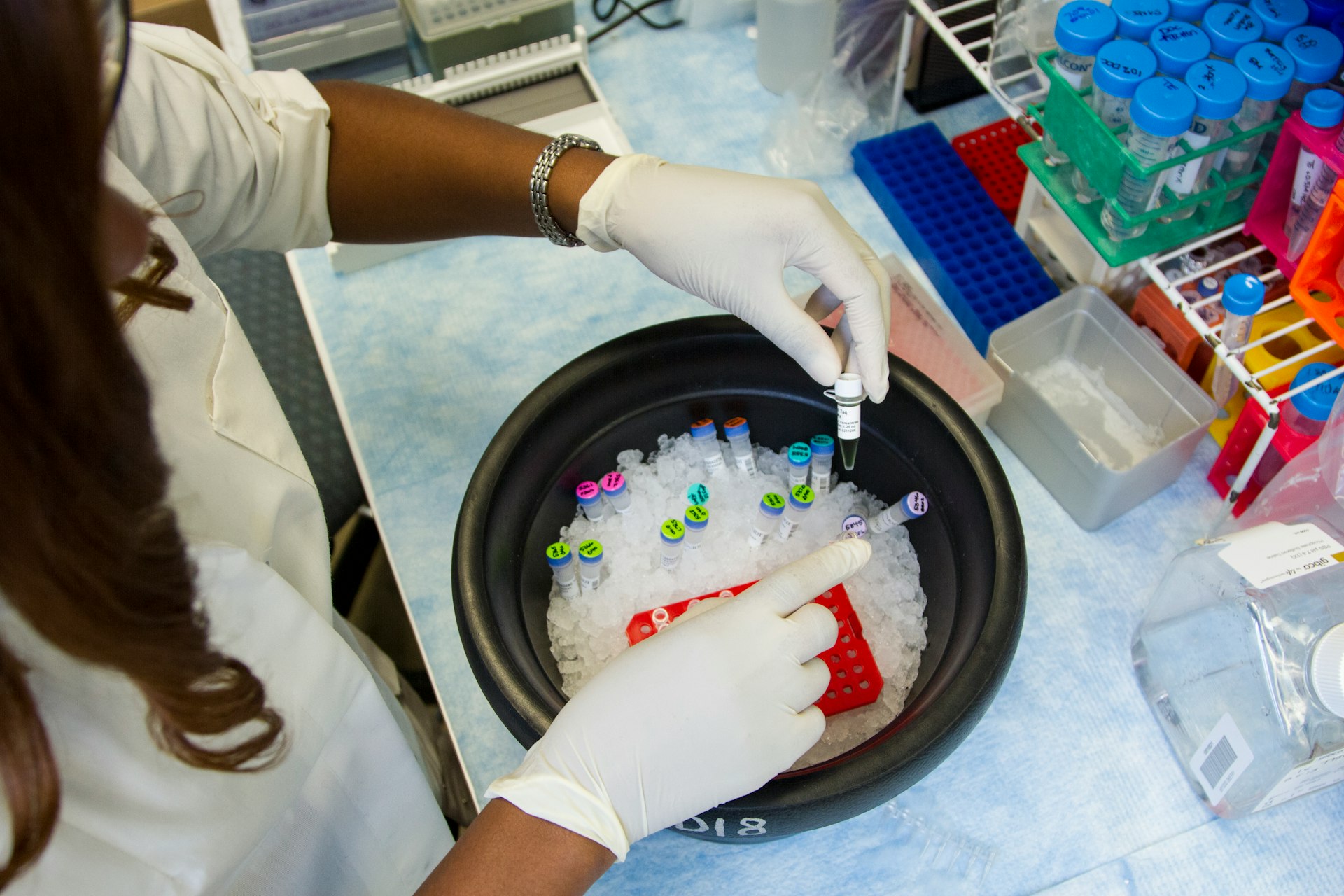
When a tumor is removed or biopsied, most patients never think about what happens to the tissue afterward. In most hospitals it is fixed in formalin for diagnosis, filed away in the pathology archive, and never seen by the patient again. That is starting to change. A growing number of cancer centers are building ways for patients to preserve their own tumor tissue and blood, keep some of it alive for advanced testing, and have a voice in how it is used. These options are rarely advertised, and many patients only learn about them after the window to preserve live tissue has closed. If you are facing surgery or a biopsy, your hospital may already offer more than you realize. The first step is knowing what to ask.
What Is Custodial Biobanking?
Custodial biobanking allows patients to preserve their own tumor tissue and blood samples for future use, with greater control over how and where those samples are used. Rather than having all samples held exclusively by a hospital, patients can request that excess material be collected, preserved, and stored to support personalized research and testing, both to pursue opportunities available today and to preserve options for the future.
The idea is simple: you should have a say in how your tissues are used.
Why Custodial Biobanking?
Pathology and standard cancer care are designed to establish an accurate diagnosis and guide treatment using the strongest available clinical evidence. Established lines of care have been studied across large patient populations and provide a sound starting point for treatment.
But what happens when those treatments stop working?
This is where the potential of personalized oncology becomes especially important. Advanced technologies, including deeper genomic sequencing, short- and long-read DNA and RNA analysis, organoid models, and functional drug testing, can uncover additional layers of evidence about an individual patient's cancer. Many of the most advanced approaches are not part of standard clinical care.
These technologies may help explain treatment resistance, identify molecular targets, or explore therapies beyond established treatment guidelines. Combining independent methods can build multiple layers of evidence to help patients and their physicians make more informed decisions.
At Kernis, clinical and scientific evidence guides our approach to personalized oncology. Custodial biobanking helps make this possible by preserving the biological material needed to pursue these questions, often beyond the capabilities or priorities of a single institution.
The time to preserve tissue is often before these questions arise, while viable material is still available.
Different Preservation Methods, Different Possibilities
How tissue is preserved determines what can be done with it later.
The default approach for tissue used in routine pathology is to fix it in formalin and embed it in paraffin (FFPE). FFPE tissue is no longer viable. It works well for diagnosis and many molecular tests, but cannot support live tissue testing and limits certain advanced analyses, including some RNA and metabolomic studies.
Fresh tissue offers the greatest flexibility. It can be divided into fixed, flash-frozen, and viable cryopreserved portions, each suited to different applications. Cryopreserved live tissue can support functional drug testing, organoid development, and certain single-cell studies, while flash-frozen tissue is often preferred for high-quality molecular profiling.
Another option is to route fresh, live tissue directly to a research laboratory for immediate testing. This can enable experiments that depend on viable cells, but requires advance planning and rapid transport and processing, often within hours of collection.
The goal is not to perform every available test. It is to preserve the right material to answer important questions that standard care has not addressed.
The Pros and Cons
The main advantage is access to advanced personalized research, including technologies that may not be available through standard clinical care. Preserving tissue also creates opportunities for future testing as new technologies emerge.
The main concern is tissue availability. Tumor samples are often limited, and material allocated to research may be needed for clinical testing or trial eligibility. Diagnostic and clinical needs must always take priority.
At the same time, strict clinical trial eligibility criteria and limited treatment options can leave patients without access to promising approaches, even when relevant scientific evidence exists. Personalized research offers another way to explore published findings and emerging evidence that may help guide care.
Custodial biobanking and patient-directed sample distribution are key tools for making this possible.
When Is It Useful?
Ideally, patients should consider tissue preservation early, while viable tumor material is available. Once tissue has been fixed in formalin, many research possibilities are permanently lost.
The value of preserved tissue may become greatest when standard treatment options are running out or have been exhausted. It can also be particularly useful earlier in rare cancers or cases with few established treatment options, where patients and their physicians may wish to pursue additional research to identify potential treatment opportunities.
Institutions Are Beginning to Offer These Capabilities
Some leading cancer centers are beginning to offer or develop more flexible tissue preservation and access options.
- Memorial Sloan Kettering (MSK) has capabilities for live tissue collection and freezing in certain circumstances, subject to institutional approval.
- UCSF has tissue preservation capabilities, although the availability of patient-directed collection, storage, and release should be confirmed with the treating team.
These capabilities remain limited, and availability depends on the department, treating team, and institutional policies. Patients should ask their institutions what they can offer specifically, including how tissue can be preserved, accessed, and released for outside research.
We will continue expanding this list. If your institution offers patient-directed tissue collection, preservation, or sample release, please contact us so we can learn about your capabilities and include your institution.
Why Don't More Institutions Offer It?
Most hospitals collect and store tissue for diagnosis, clinical care, or institution-led research. Few have programs designed to support personalized research directed by individual patients.
Even when advanced technologies are available within an institution, patients are not necessarily given access to them or offered help coordinating outside research. Institutional priorities, research protocols, and departmental resources often determine what is available.
The Challenge: Getting Your Samples Back and Putting Them to Use
Preserving tissue is only part of the process. Patients must also be able to retrieve their samples, identify research that could answer meaningful clinical questions, and arrange for samples to be legally transferred to qualified laboratories.
Hospitals may require institutional approvals, material transfer agreements (MTAs), consent documentation, or other procedures before releasing samples for outside research. Navigating these requirements and coordinating the right research can be difficult and time-consuming.
Questions to Ask Your Institution
- Availability: Do you offer patient-directed or custodial biobanking?
- Preservation: Can you preserve live tissue through viable cryopreservation, in addition to FFPE and flash-freezing?
- Research and results: What advanced research technologies do you offer beyond standard clinical testing? Do these include advanced short- and long-read sequencing, organoid models, and functional drug testing? Can you coordinate access to technologies not available at your institution, and will you return the results to me?
- Access: Will you release and ship my samples to a laboratory of my choosing?
- Evidence: Can results from outside research laboratories be reviewed by my clinical team to help inform care?
- Process: What is the process for requesting tissue preservation and release? Who needs to be involved, how long will it take, and will an MTA or other approval be required?
- Clinical reserve: How much tissue must remain available for future diagnostic or clinical needs?
Where Things Are Heading
Institutional custodial biobanking programs are still in their infancy. Access remains limited, and patients often face significant hurdles when trying to preserve, retrieve, and use their samples for personalized research.
More institutions are beginning to recognize the value of preserving tissue for future use and giving patients a greater role in deciding how their samples are used.
If you are considering tissue preservation, ask your treating institution what options are available. Even if a formal custodial biobanking program does not exist, there may be ways to preserve and access tissue for future research.
Kernis Health provides concierge coordination and tissue preservation services. This article is informational, not medical advice. Decisions about your care should be made with your oncology team.
Own your biology.
If you or someone you love is preparing for cancer surgery, the best time to plan for tissue preservation is now. Talk to our team and learn what your options are.
Get Started